
Vacant Lot Clearing Built for Lehigh Acres Development Conditions
Platted Lot Clearing Across a Vast Sandy Flatwoods Grid
Lehigh Acres holds more platted residential lots than most Florida counties combined. The grid of planned streets runs for miles across sandy flatwoods terrain that has remained largely undeveloped for decades in many sections. Those platted but unbuilt lots accumulate vegetation steadily — palmetto flats give way to Brazilian pepper thickets within a few years of being left uncleared, and after a decade of growth, many parcels require full mechanical clearing before any construction assessment can even begin. The density of unmanaged vacant lots in Lehigh Acres means the clearing queue here is large, ongoing, and driven by a development pattern still working through lots platted in some cases fifty or more years ago. Sandy upland habitat is the dominant soil condition across most of the area. That same sandy terrain that makes stump grinding and excavation more efficient also supports active gopher tortoise populations across a significant share of the undeveloped lot inventory. A cleared lot in Lehigh Acres without a gopher tortoise survey and relocation permit from Florida Fish and Wildlife is a compliance violation before the first tree hits the ground. Most platted residential lots — particularly those with established palmetto and scrub vegetation — carry that obligation as a prerequisite to mechanical clearing. The flat terrain also shapes clearing sequencing. Without natural drainage relief, grading after clearing needs to establish positive outfall toward roadside swales to prevent pooling on the cleared surface — a condition that affects construction timelines and site usability well after the initial clearing work is done.
Vegetation, Wildlife, and Permit Realities on Lehigh Acres Lots
Brazilian pepper is present on the majority of Lehigh Acres lots that have been sitting unmanaged for more than a few years. As a Class II prohibited plant under Florida statute, it requires compliant removal — mechanical clearing followed by material management that prevents re-sprouting. The persistent seed bank that Brazilian pepper leaves behind means follow-up treatment is often necessary to prevent re-establishment within twelve to eighteen months of initial clearing. Property owners building on a previously infested lot need to understand that the clearing cost addresses removal and disposal, but seed bank pressure continues after the work is done and may require a maintenance program. Lot clearing in Lehigh Acres is frequently driven by development timelines — buyers who have held vacant lots for years and are now ready to build, investors preparing parcels for sale, and builders acquiring land in sections where infrastructure has recently caught up with the platted street grid. Each of those scenarios has different clearing specifications. Pre-construction clearing needs to meet contractor depth and grade requirements. Pre-sale clearing is typically less intensive but needs to address invasive species and visual presentation. Understanding which clearing scope applies to a given project determines the equipment deployment, debris handling method, and finished grade requirement — and getting that wrong means a second mobilization. Permit timing also matters in Lehigh Acres. Lee County vegetation removal permits have review timelines that need to be built into the project schedule from the start, concurrent with wildlife survey coordination.
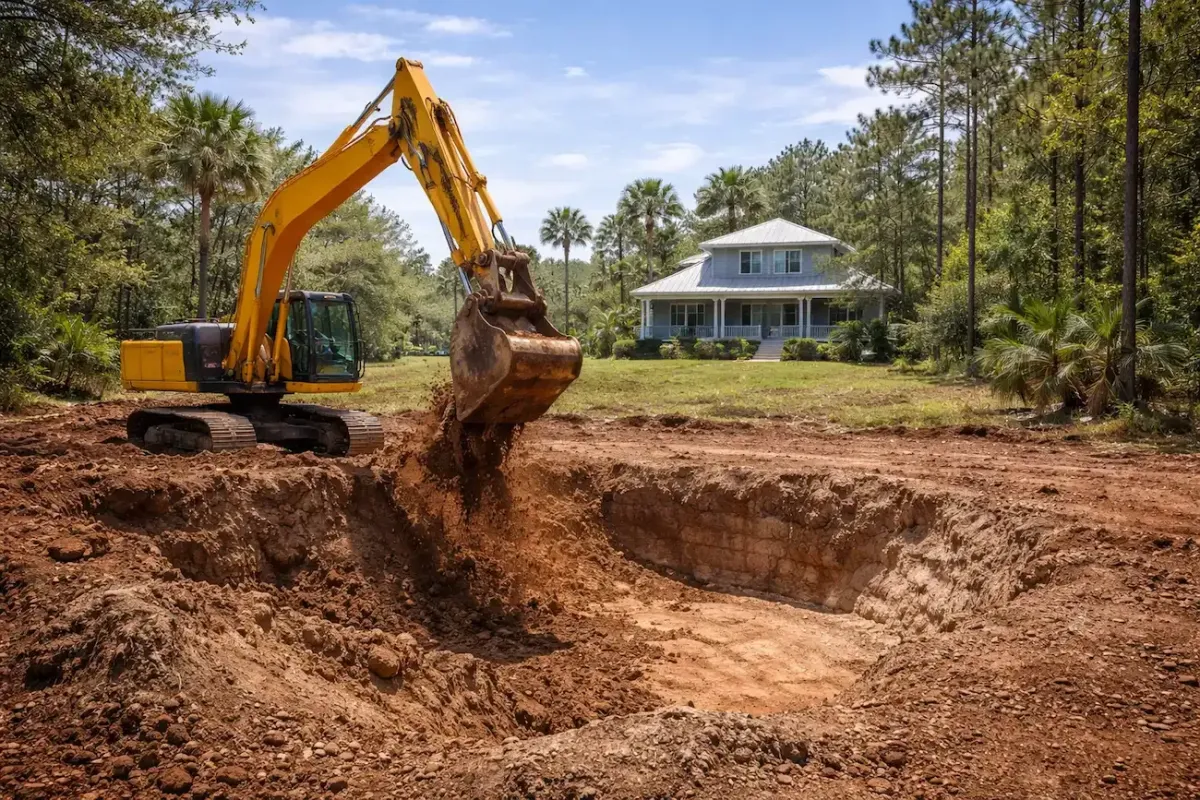
Wildlife Survey and Gopher Tortoise Coordination
Gopher tortoise survey coordination is the most commonly overlooked pre-clearing requirement on Lehigh Acres residential lots. Most platted parcels in the area — particularly those with undisturbed sandy upland habitat — carry a Florida Fish and Wildlife permit requirement for licensed surveyor assessment and relocation authorization before any mechanical clearing begins. The obligation applies based on habitat characteristics, not lot size. A quarter-acre lot with suitable sandy upland vegetation carries the same survey requirement as a larger acreage parcel in the same habitat zone. Skipping the survey step does not eliminate the obligation — it creates a stop-work situation when the violation is identified during the clearing process. The survey-to-relocation timeline needs to be built into the overall project schedule from the first assessment. Licensed surveyors identify active and inactive burrows, and relocation permits from Florida Fish and Wildlife authorize the movement of tortoises from the clearing zone to approved receiver sites. That process has a timeline that affects when clearing equipment can begin operating on the lot. Starting permit applications and wildlife survey coordination concurrently — rather than sequentially — keeps the overall clearing timeline aligned with construction or development deadlines. Post-survey, the clearing scope can proceed with confidence that the wildlife compliance step has been addressed properly. Our team coordinates the survey process and integrates the wildlife timeline into the overall project schedule so Lehigh Acres lot owners are not caught waiting on permits after equipment is already on standby.
Brazilian Pepper and Invasive Vegetation Removal
Brazilian pepper removal on Lehigh Acres lots is not a simple cut-and-clear operation. As Florida's most widespread Class II prohibited plant, Brazilian pepper requires mechanical removal followed by compliant material management — the cleared debris cannot be left on site in any condition that allows re-sprouting or seed dispersal. Chipping on-site into fine material, composting off-site, or hauling to an approved disposal facility are the standard disposal options. The choice between them affects both the project timeline and the cost structure, and it should be determined at the assessment stage based on debris volume and the owner's site-use timeline. Beyond the disposal requirement, Brazilian pepper's persistent seed bank creates a follow-up treatment pressure that does not disappear after the initial clearing. Germination from residual seeds in the soil can produce significant regrowth within one to two growing seasons on an untreated cleared lot. For owners with a near-term construction timeline, the seed bank issue is manageable — clearing to construction grade and building quickly reduces the exposure window. For owners holding a cleared lot for a year or more before building, a follow-up treatment plan should be incorporated into the project scope from the beginning. Cogongrass is also present on some Lehigh Acres parcels in areas with disturbed soil conditions. Unlike Brazilian pepper, cogongrass management requires specific mechanical and herbicide treatment sequencing to prevent spreading during the clearing process. Identifying its presence before clearing begins is part of our pre-clearing site assessment on Lehigh Acres lots.
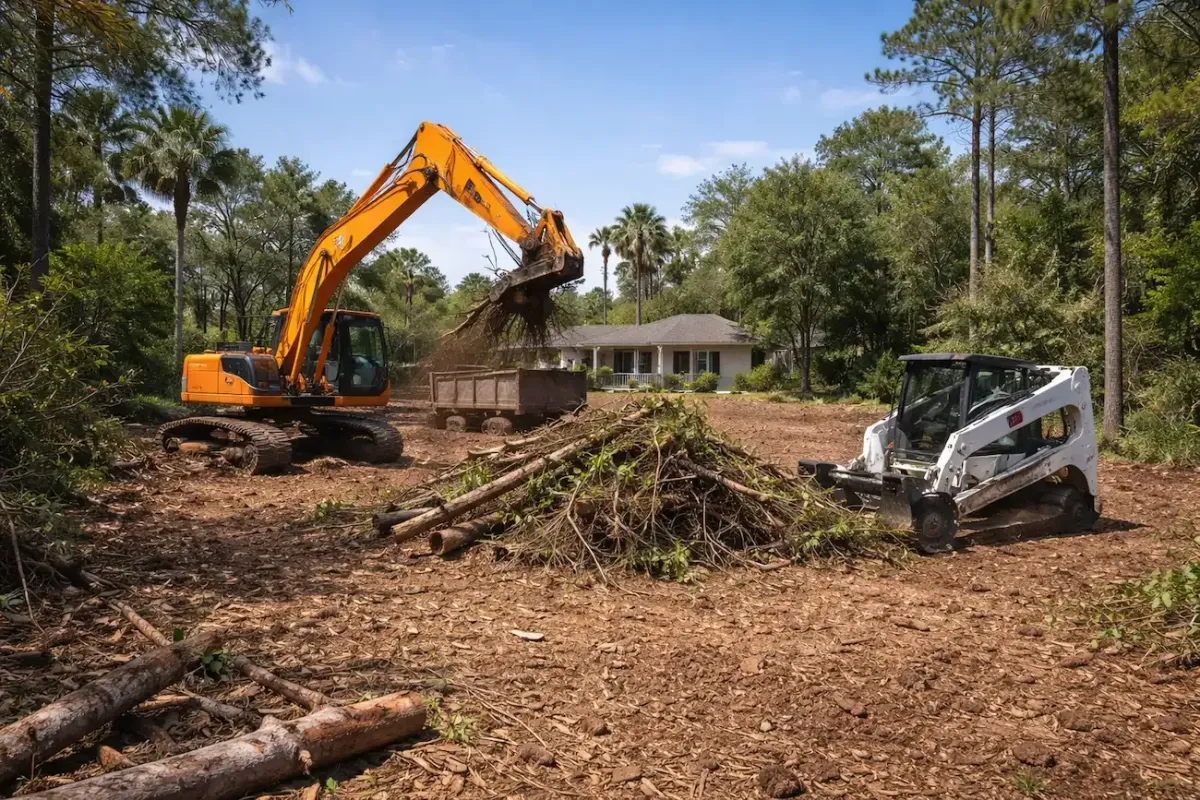
Lot Clearing With Debris Management and Stump Grinding
Lot clearing in Lehigh Acres for residential construction involves a sequencing that goes beyond cutting and hauling vegetation. Stump grinding to contractor-specified depth — typically 8 to 12 inches below finished grade for residential slab foundations — needs to follow the vegetation clearing before the site can be graded. The order matters because stump grinding after grading disrupts the established grade and creates rework. Addressing stumps immediately after vegetation clearing, before the grading pass, keeps the overall project moving efficiently toward a construction-ready surface. Debris management on Lehigh Acres lots depends on lot size, vegetation density, and the owner's timeline and cost priorities. For lots with primarily palmetto and moderate Brazilian pepper coverage, forestry mulching — which grinds all vegetation in place and leaves a mulch layer on the cleared surface — is the most efficient single-pass approach. For heavier timber coverage, established tree stands, or lots where the finished grade requires a clean surface, haul-out is the more practical option. Mixing methods based on actual site conditions is common on Lehigh Acres lots where the vegetation type varies across the parcel. Post-clearing grading to establish positive drainage toward the roadside swale is the final step before the lot is ready for construction. Lehigh Acres flat terrain does not provide natural drainage relief, so grading needs to be deliberate — establishing consistent slope toward the appropriate outfall point and verifying that the finished pad elevation meets Lee County building permit specifications for the intended construction scope.
Fort Myers' Land Clearing Professionals
Proudly serving Fort Myers, Cape Coral, Lehigh Acres, Estero, North Fort Myers and San Carlos Park for 9+ years.
Comprehensive Land Clearing Services in Fort Myers
Tailored to Your Needs
We offer a full range of land clearing and site preparation services for Fort Myers residential and commercial properties. From initial lot clearing and invasive species removal to final grading and stump grinding our Lee County team handles every phase of site prep with local permit knowledge and Florida-specific technique expertise.
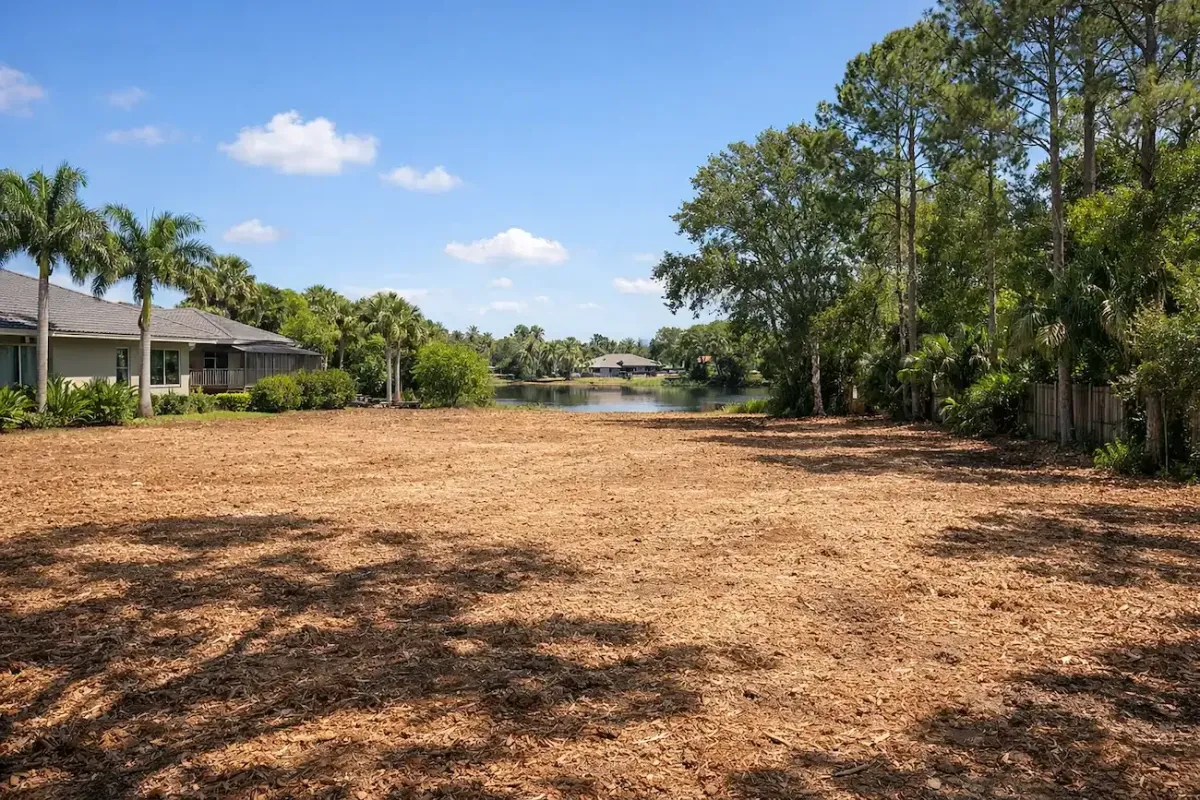
Complete land clearing for Fort Myers residential and commercial sites with Lee County permit expertise and gopher tortoise coordination.
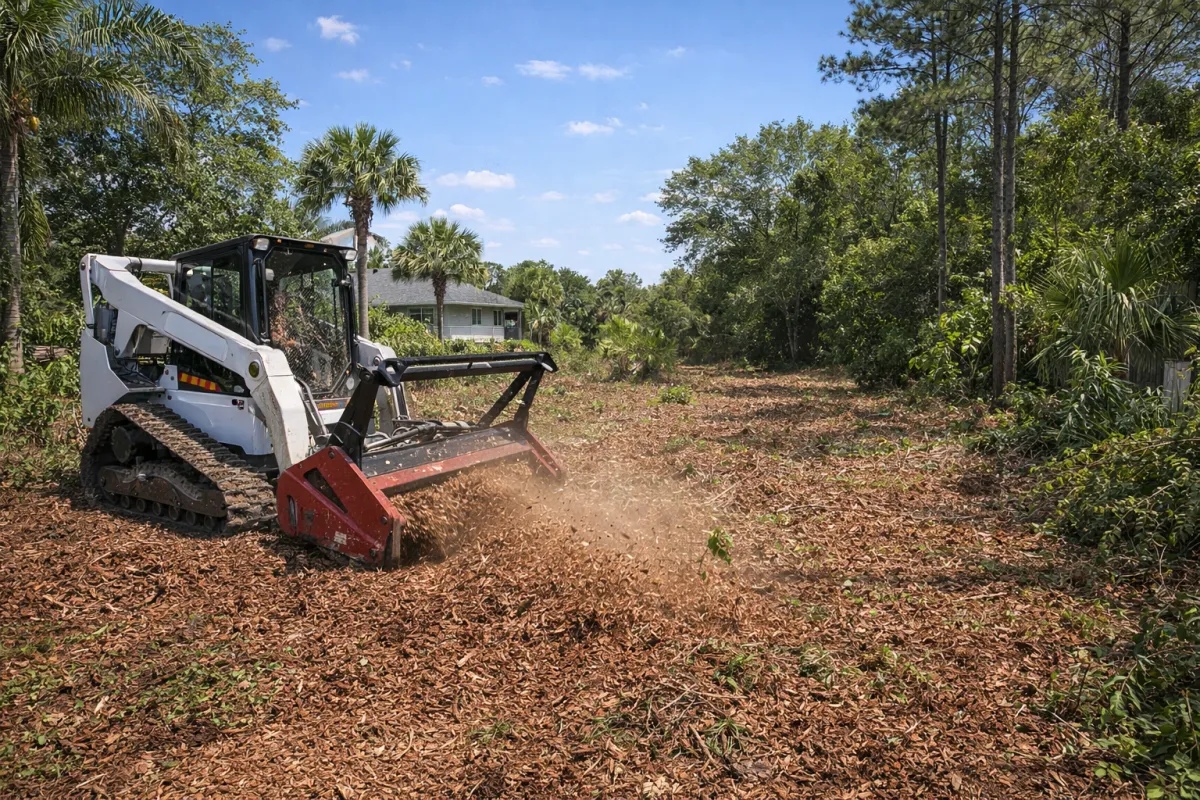
Single-pass forestry mulching for Lee County lots with minimal soil disturbance and full compatibility with FEMA flood zone drainage requirements.
Residential lot clearing in Fort Myers with gopher tortoise coordination and Lee County permit expertise on every job.
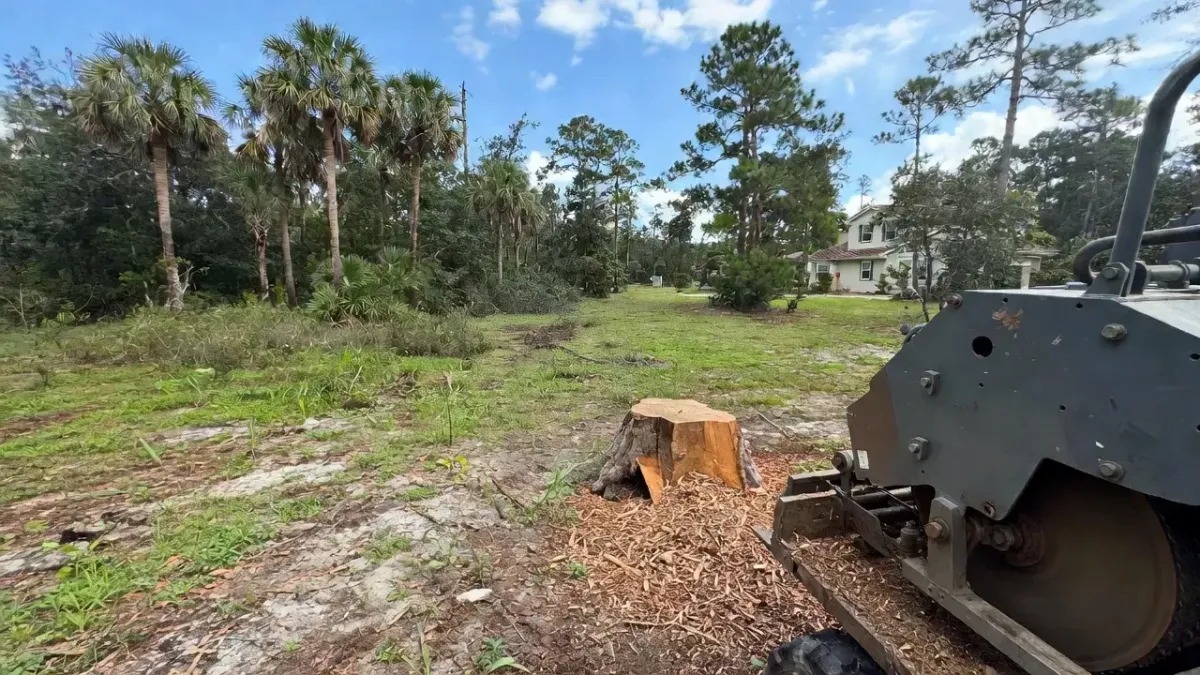
Stump grinding to construction depth for pre-build prep and post-storm cleanup across Lee County residential and commercial properties.
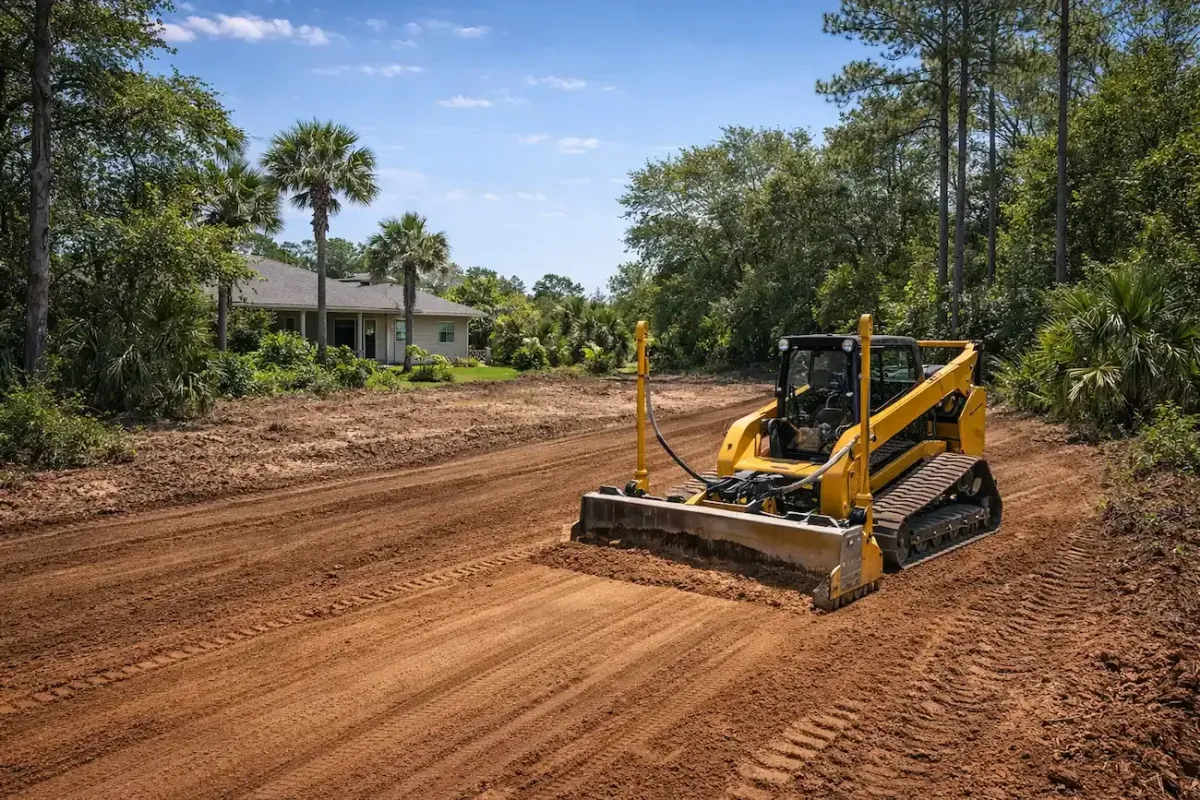
Post-clearing land grading for flood zone compliance and construction-ready site prep across Lee County Florida.
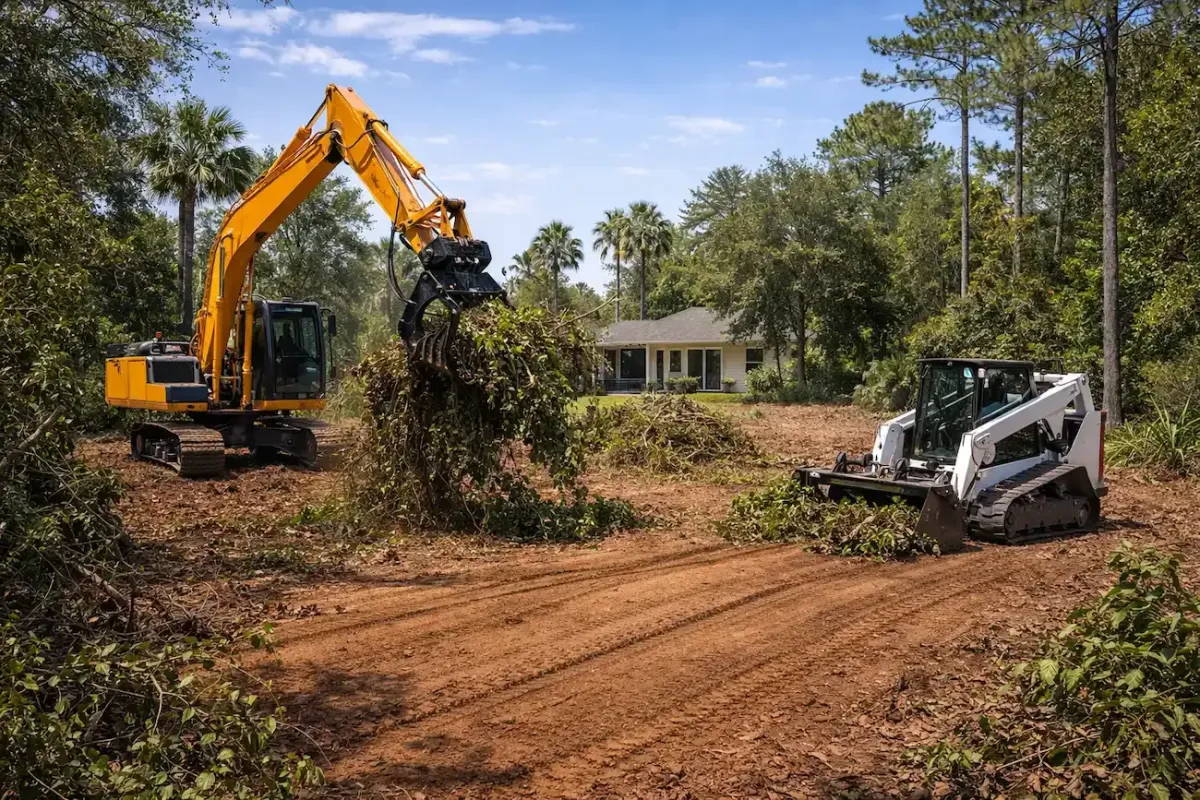
Florida-compliant removal of Brazilian pepper melaleuca and invasive vegetation across Lee County residential and commercial properties.
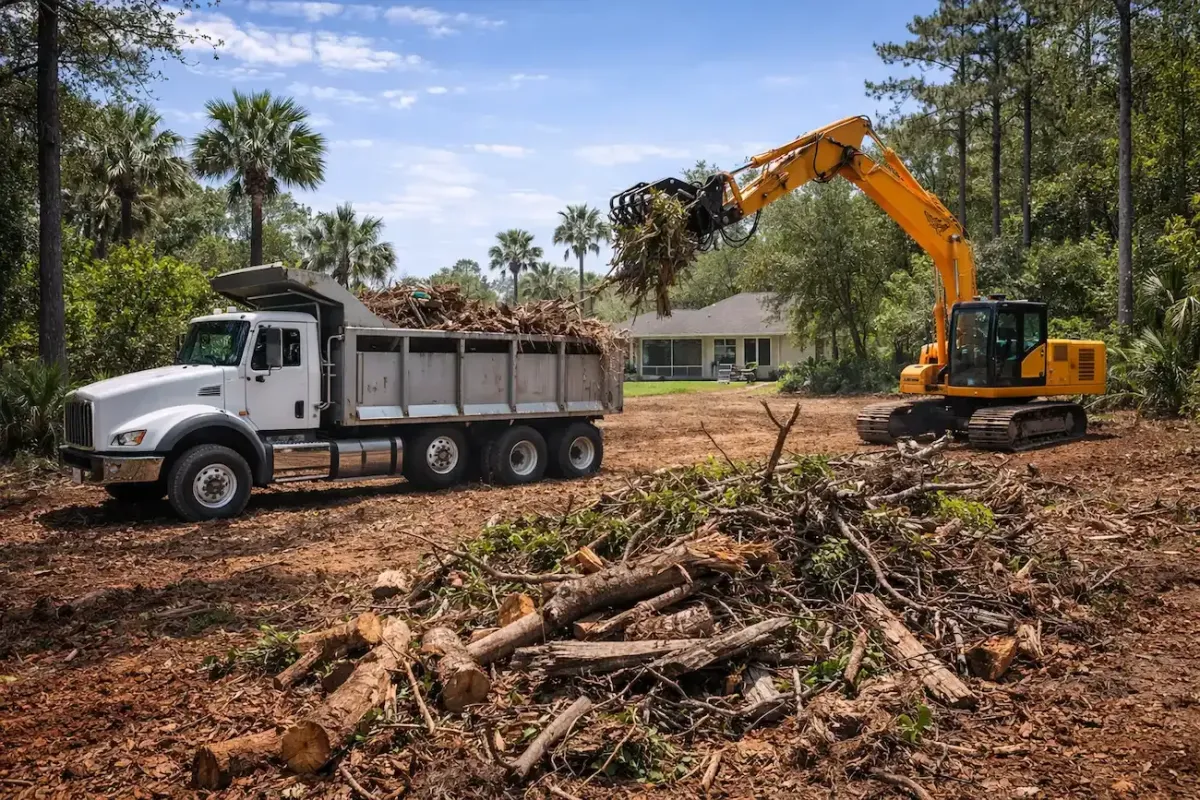
Post-hurricane land clearing and debris removal across Lee County properties carrying ongoing Ian-era storm damage.
Residential and commercial excavation in Fort Myers for foundations ponds and SFWMD-compliant canal bank and drainage work.
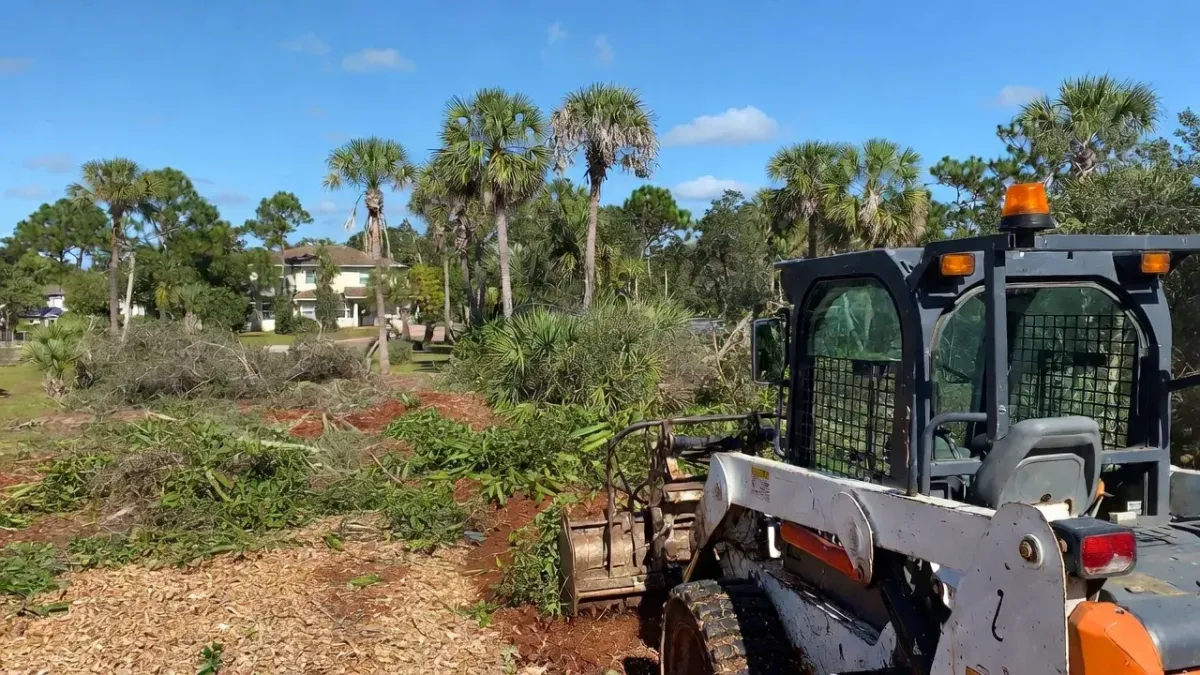
Fast brush clearing for overgrown Fort Myers lots HOA compliance notices and vacant property maintenance across Lee County.
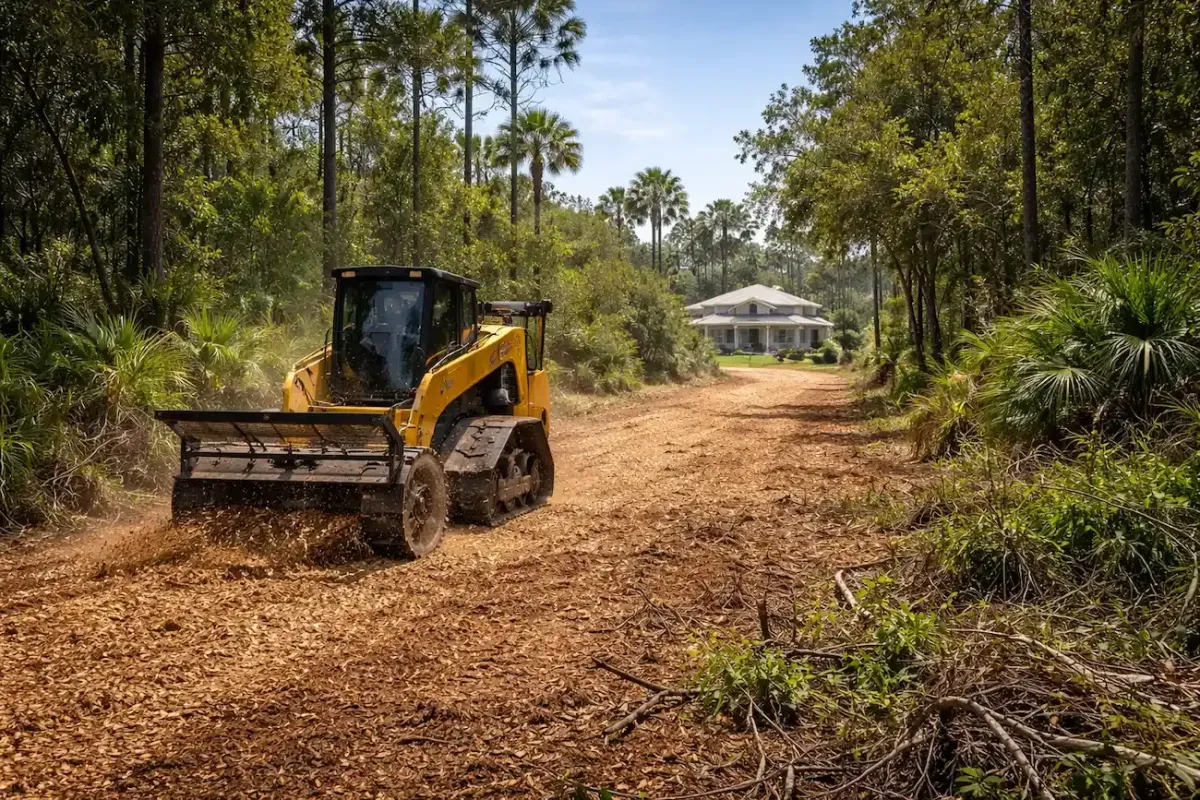
Utility corridor canal bank and easement clearing in Fort Myers and Lee County with full SFWMD and permit compliance.
Frequently Asked Questions
Land Clearing can be complex, and we’re here to provide answers to common questions. Here are some frequently asked questions from our clients.
Frequently Asked Questions about Land Clearing Fort Myers
Do I need a permit for land clearing in Fort Myers?
In most cases yes. Lee County requires a vegetation removal permit for clearing on properties with certain vegetation types and SFWMD may require an environmental resource permit if your property is near wetlands canals or waterbodies. Permit requirements depend on lot size proximity to protected areas and clearing scope. Our team identifies which permits apply before any work begins.
What invasive species are most common on Fort Myers properties?
Brazilian pepper is the most widespread invasive on Lee County properties and requires specific handling under Florida law. Melaleuca creates significant fire hazard when unmanaged and requires licensed contractors for large-scale removal. Australian pine is common on coastal and waterfront lots and cogongrass appears on many undeveloped tracts. Each species requires a different removal approach and our crew is trained in Florida-compliant methods for all of them.
How does clearing near a canal or wetland work in Lee County?
Clearing within 25 to 50 feet of wetlands canals and waterbodies in Lee County is regulated under SFWMD environmental resource permit requirements. Buffer distances depend on waterway classification and type of vegetation being removed. Violating these setbacks can result in stop-work orders and restoration requirements. We assess setback compliance before any clearing begins on water-adjacent properties.
What is the difference between forestry mulching and traditional clearing?
Forestry mulching uses a single machine to grind all vegetation into a mulch layer that stays on site. Traditional clearing cuts and hauls all debris away. For Lee County sandy flatwoods soils forestry mulching often produces better results because the mulch retains moisture reduces erosion and improves drainage over time. It also causes less ground disturbance than conventional clearing which matters on lots near SFWMD-regulated wetlands.
How long does land clearing take in Fort Myers?
Most residential lot clearing jobs in Fort Myers are completed in one to two days depending on lot size vegetation density and debris volume. Heavily wooded lots with mature Brazilian pepper or melaleuca canopy may take longer particularly if gopher tortoise surveys and relocation coordination are required. Large commercial or acreage projects are scoped during the site visit and scheduled accordingly.
Does my Fort Myers property have gopher tortoises?
Gopher tortoise populations are present throughout Lee County on undeveloped and semi-developed properties. Clearing without a gopher tortoise survey and relocation permit from Florida Fish and Wildlife is a serious violation with significant fines. Our team coordinates with a licensed wildlife surveyor before clearing begins to identify active and inactive burrows and obtain the required relocation authorization. This step is required on most Lee County properties with sandy upland habitat.
Still Have Questions About Land Clearing Fort Myers?
Speak With a Trusted Land Clearing Expert Today.
What Our Satisfied Clients Have to Say About Fort Myers Land Clearing Pros
We pride ourselves on delivering great results and experiences for each client. Hear directly from home and business owners who’ve trusted us with their Land Clearing needs.
The Trusted Land Clearing Expert Near You
Ready to hear more about expert services at Fort Myers Land Clearing Pros?
Contact us today to receive a detailed, no-obligation quote.
Serving McGregor, Edison Park, Dunbar, Whiskey Creek, Cypress Lake, Gateway & Greater Ft. Myers
Mon–Fri: 7 AM–5 PM | Sat: 8 AM–2 PM | Sun: Closed

